Extreme
Platform ONE™
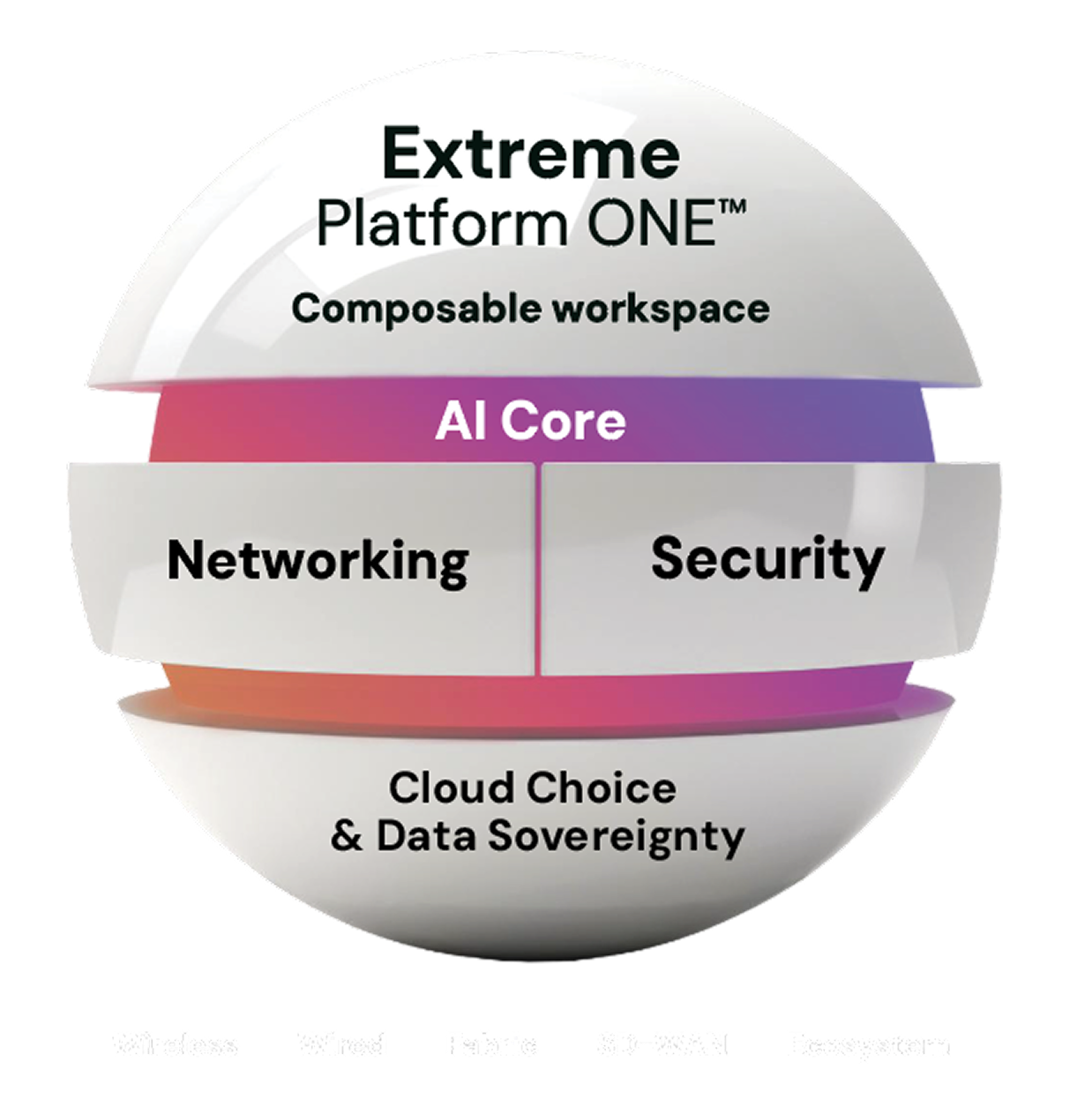
Unifying networking, security, and AI into a single, cohesive SaaS experience — and radically simplifying the operational complexity that runs the modern enterprise network.
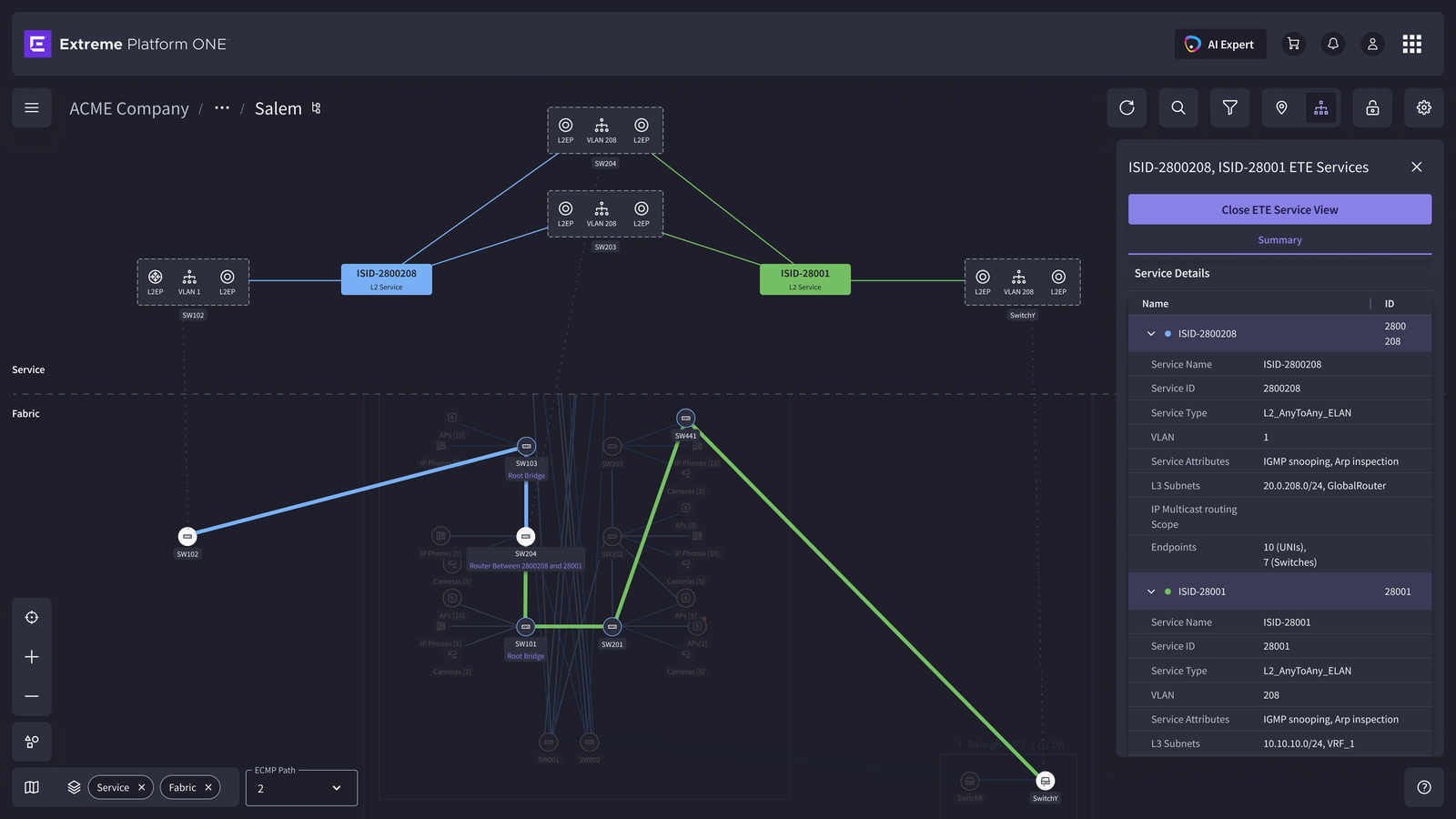
A next-generation SaaS platform that radically simplifies operational complexity — unifying networking, security, and AI into one cohesive experience.
From real-time issue detection to AI-powered coaching, IT leaders across industries have called it a complete game changer. The platform transforms IT teams through proactive insights, seamless cloud integration, and GenAI-driven support — enabling faster decisions and reducing the burden of day-to-day network management.
Operational fragmentation. Networking, security, and management lived in separate platforms, forcing constant context-switching with no single source of truth.
Reactive-only workflows. Without proactive monitoring or intelligent alerting, teams were always responding after issues had already impacted users.
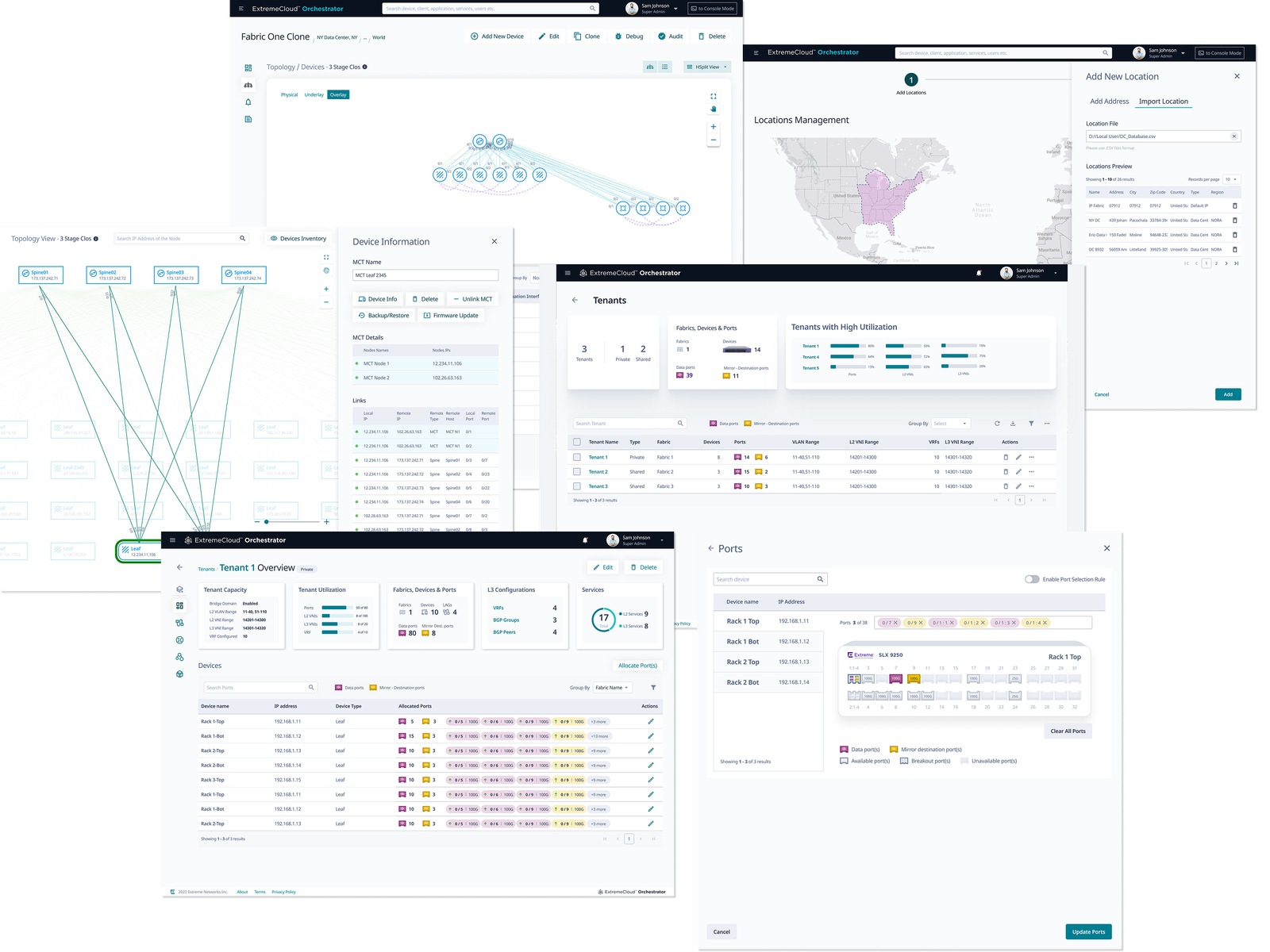
Visualization complexity. Topologies spanning fabric layers, VLANs, M/LAGs, vISTs, wireless overlays, and multi-vendor device mixes were hard to represent without overwhelming or oversimplifying.
High cognitive load. Engineers carried significant mental overhead just to understand the current state of the network — let alone diagnose or plan changes.
Slow troubleshooting cycles. Resolving complex issues relied on tribal knowledge and lengthy escalations, with no AI-assisted guidance in the workflow.
Unify the experience. Bring networking, security, and AI-driven operations into one coherent platform — a complete picture without switching tools.
Shift reactive to proactive. Real-time detection, predictive insights, and intelligent alerting so problems are resolved before users are affected.
Make complexity scannable. Topology visualizations that stay faithful to technical reality while remaining fast to read across skill levels.
Accelerate with AI. GenAI-powered coaching and diagnostics built into the workflow — contextual guidance without leaving the platform.
Build a scalable foundation. Contribute to a robust design system (EDS) so future features ship faster with consistent quality across the portfolio.
Ideation
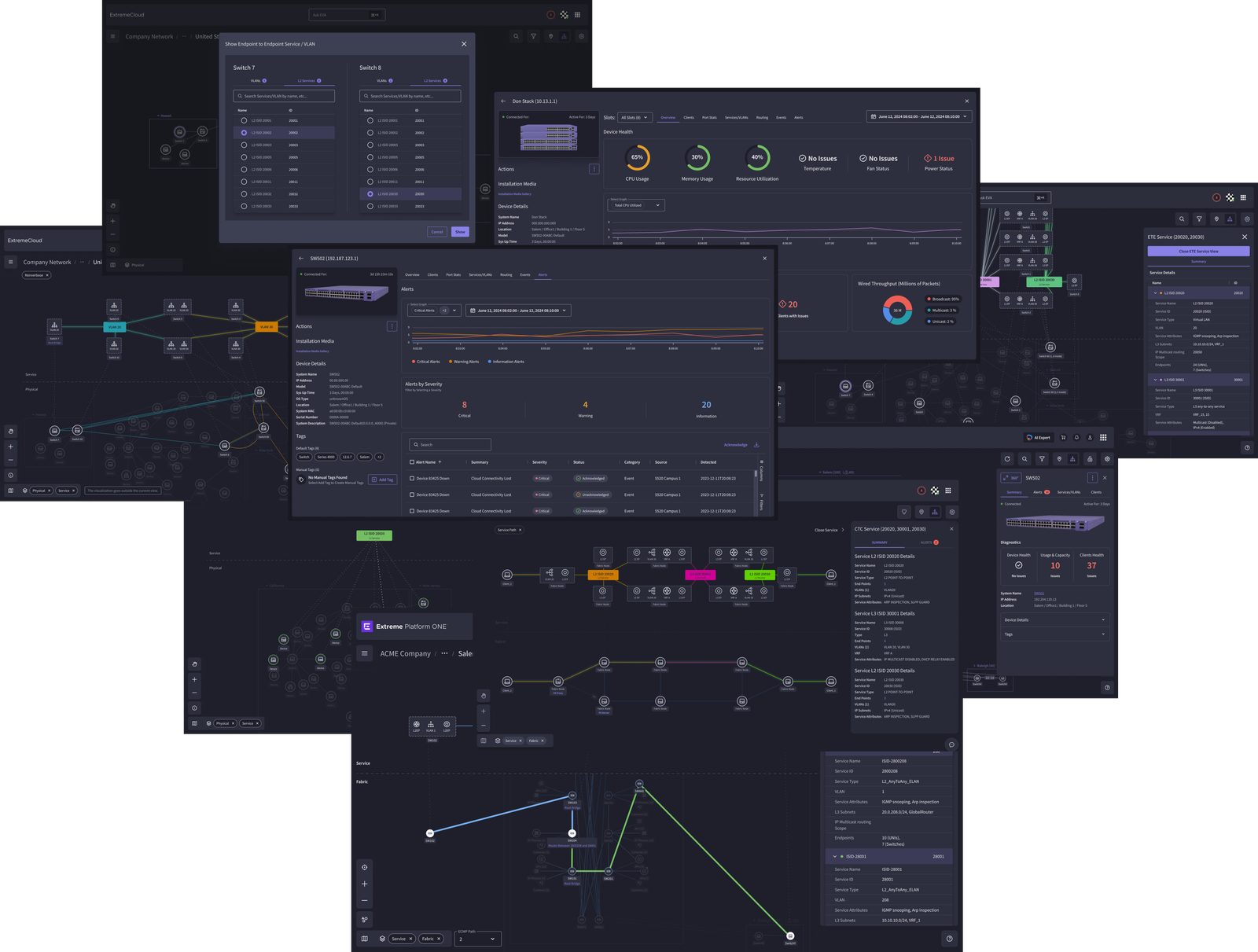
The process began with collaborative team workshops to define user personas and explore how best to represent complex network topologies. We evaluated multiple approaches for the network-fabric canvas — including several rounds of internal ideation and a structured selection of third-party canvas libraries able to handle enterprise-scale visualization.
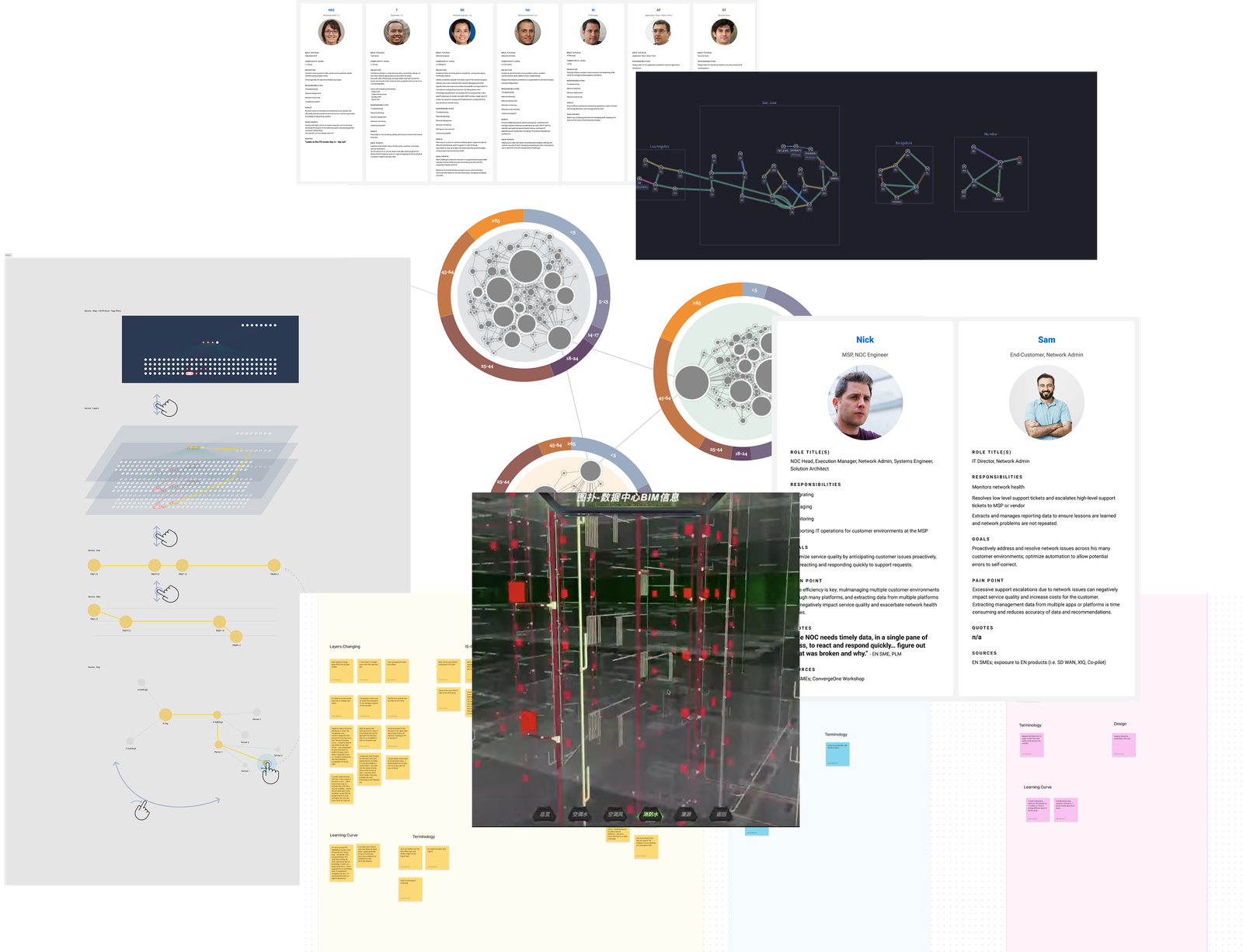
Wireframing
Working closely with SMEs, multiple wireframe iterations explored device placement, link rendering, layer separation, and information density across fabric layers, VLANs, M/LAGs, vISTs, and wireless connections. Each round was validated with technical stakeholders — producing topology canvas layouts, wired and wireless device detail views, and structured client-connection representations.
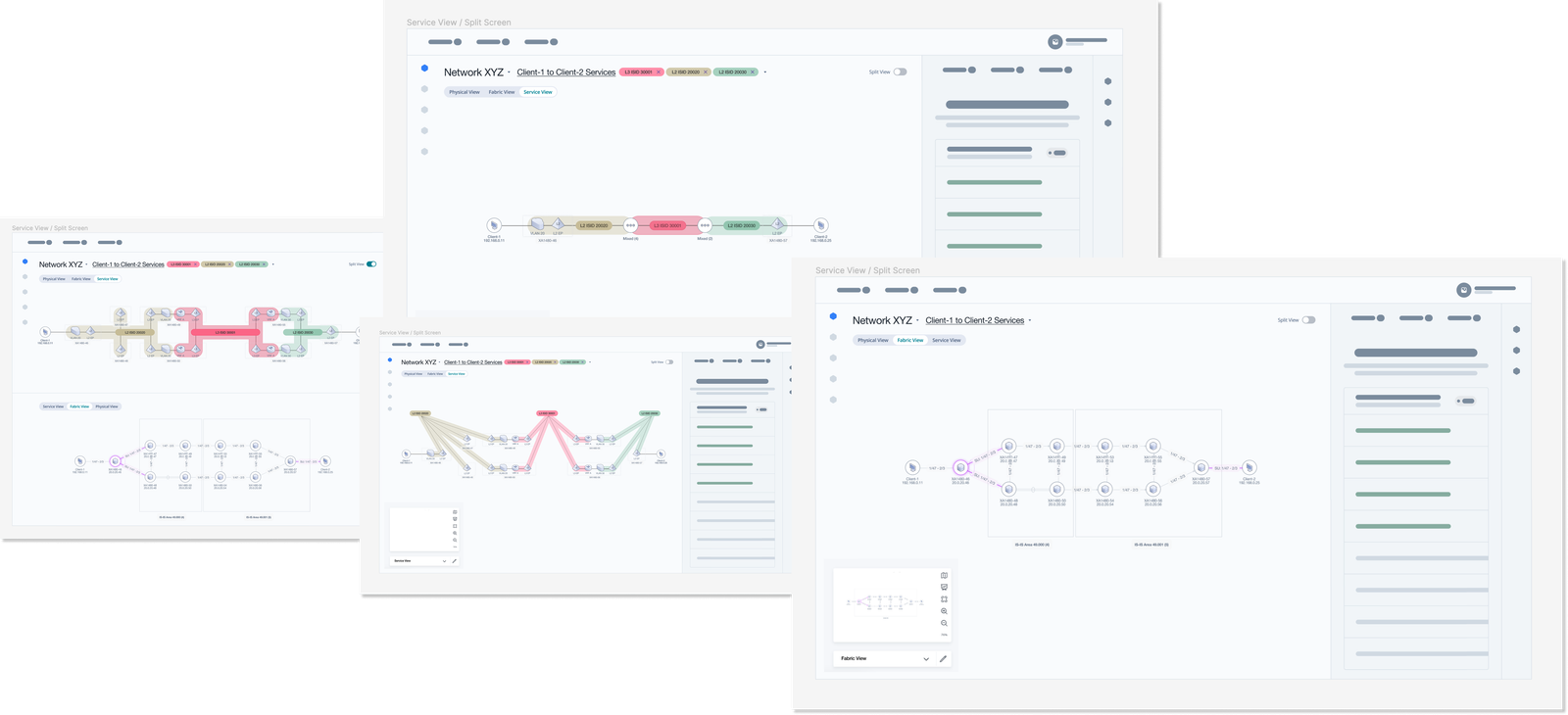
Design Evaluation
High-fidelity designs were evaluated on two dimensions: technical accuracy, verified with SMEs, and design-system integrity against EDS tokens, styles, and interaction standards. Where components fell short, new ones were proposed and contributed back — a cycle that expanded as the platform grew to include TPMEs, tunnel concentrators, controllers, and third-party elements.
Design System (EDS)
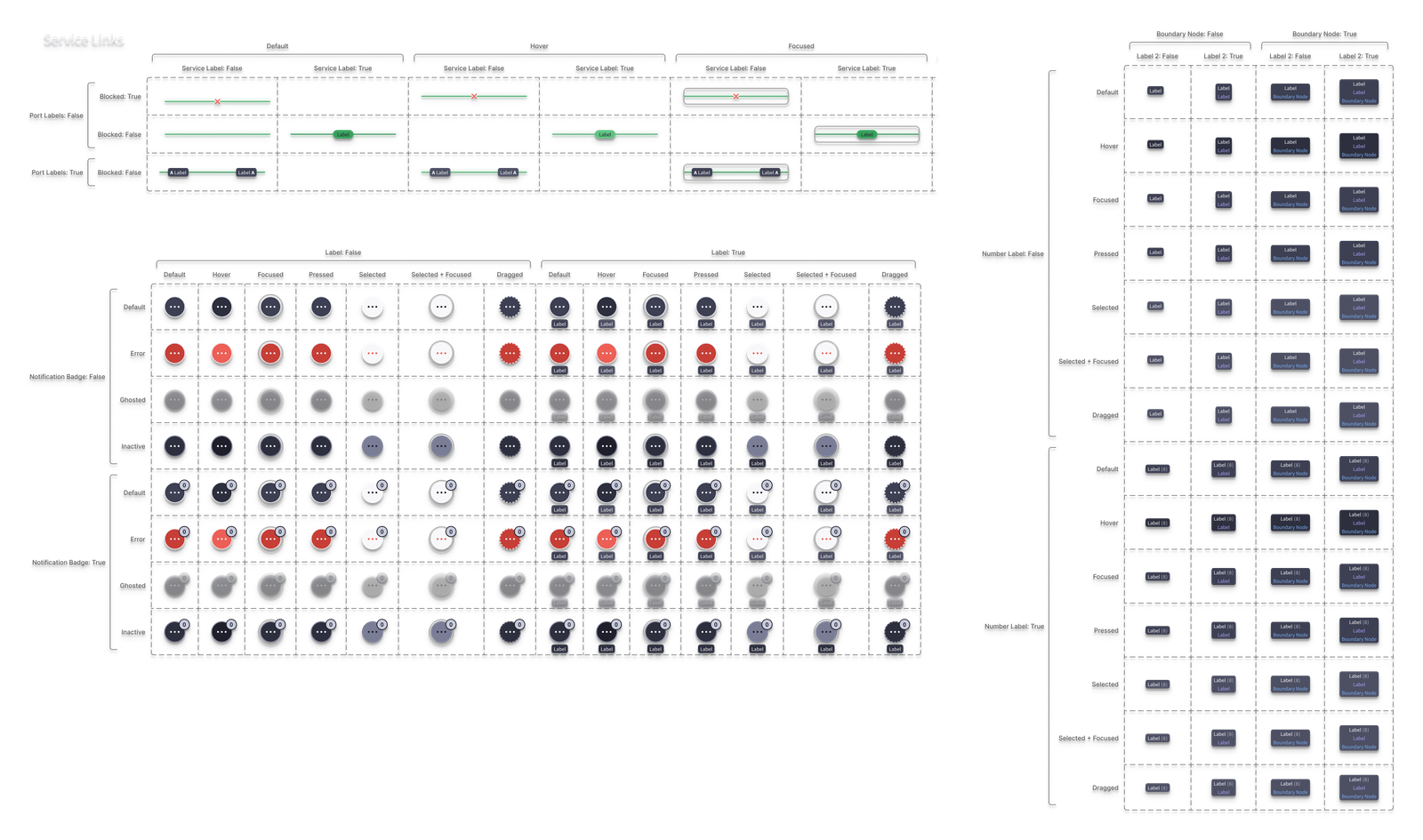
The work was grounded in the Extreme Design System (EDS) — a modern component library built with dedicated design-system colleagues and connected to the UI through design tokens. A significant number of new components were contributed to EDS, with delivery and governance managed alongside the EDS team and technical writers.
User-Testing Research
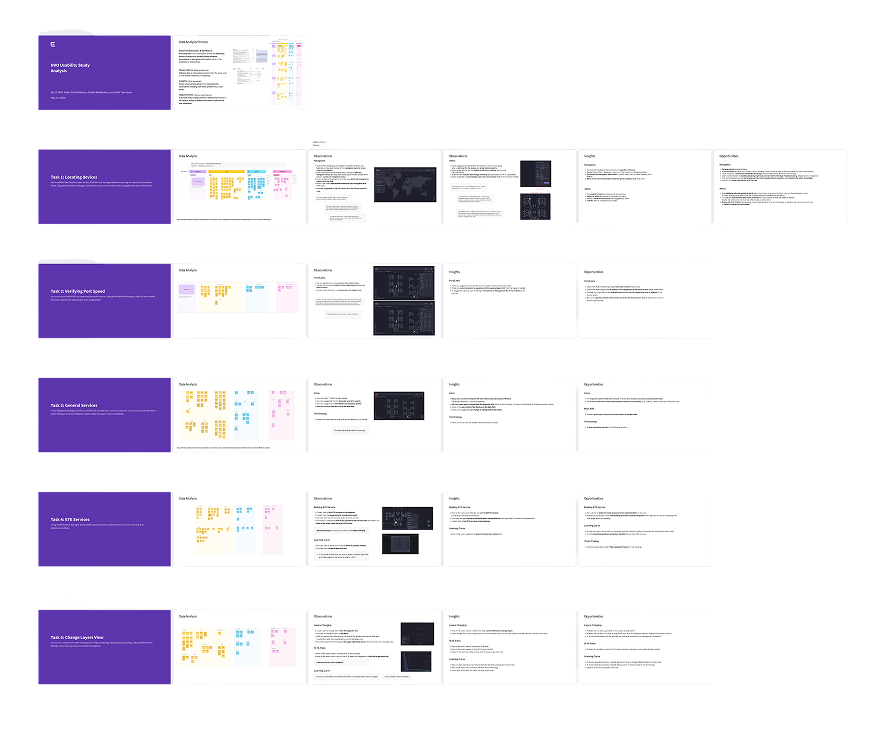
Customer research ran continuously — managed by the Design Team Manager and conducted by a dedicated UX Researcher. Findings were reviewed, sorted, prioritized, and implemented by the NVO design team, so real user feedback shaped UI and UX decisions at every stage of the product's evolution.
AI Prototyping
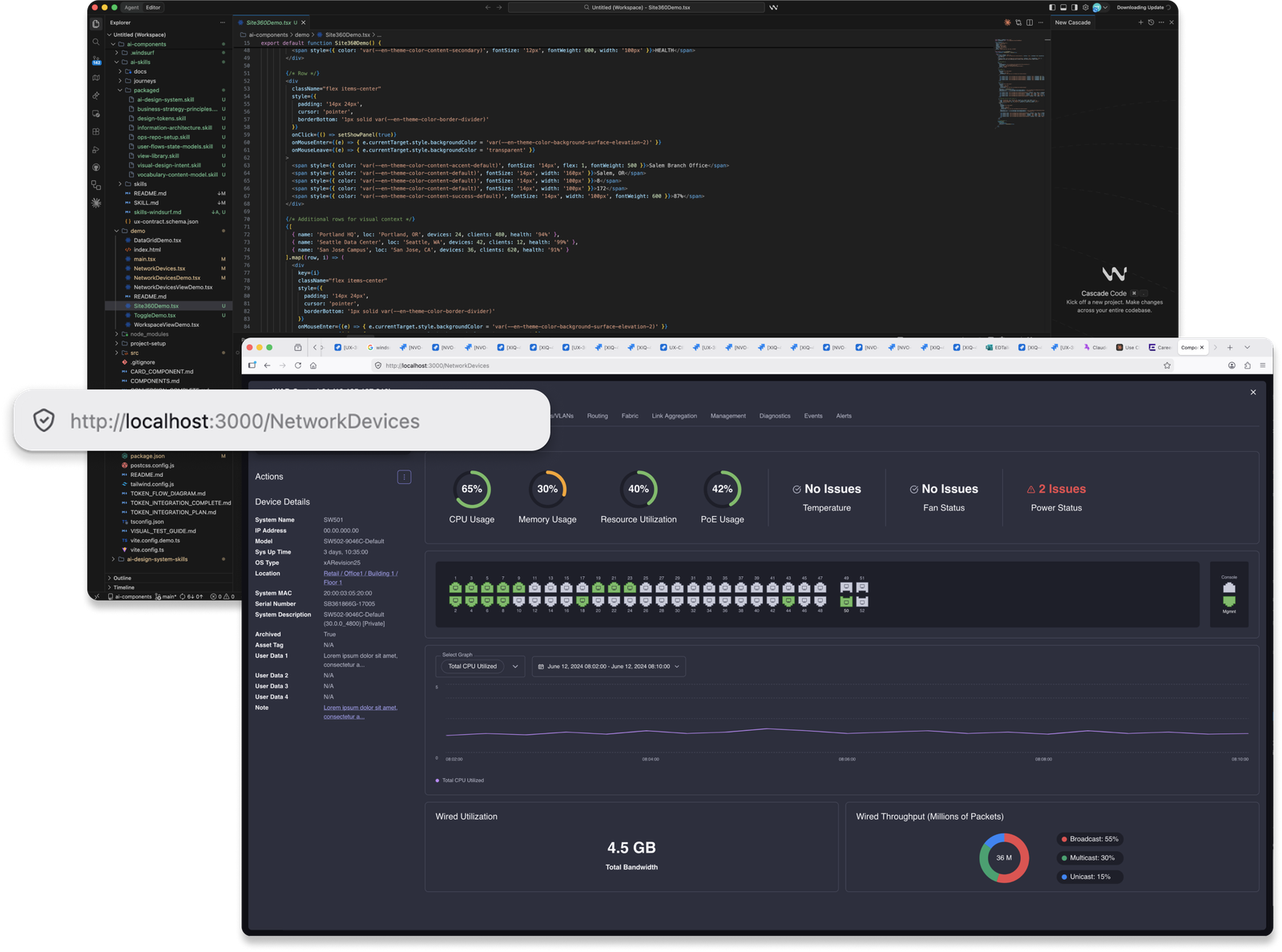
An internal research effort explored building polished, high-fidelity prototypes wired directly to the design system — using AI-assisted tooling (Claude, Windsurf/Devin), Figma MCPs, and AI skills to speed prototype creation, link designs to Jira tickets, and sharpen the speed and quality of stakeholder alignment.
IT leaders across industries have called it a complete game changer for network operations.